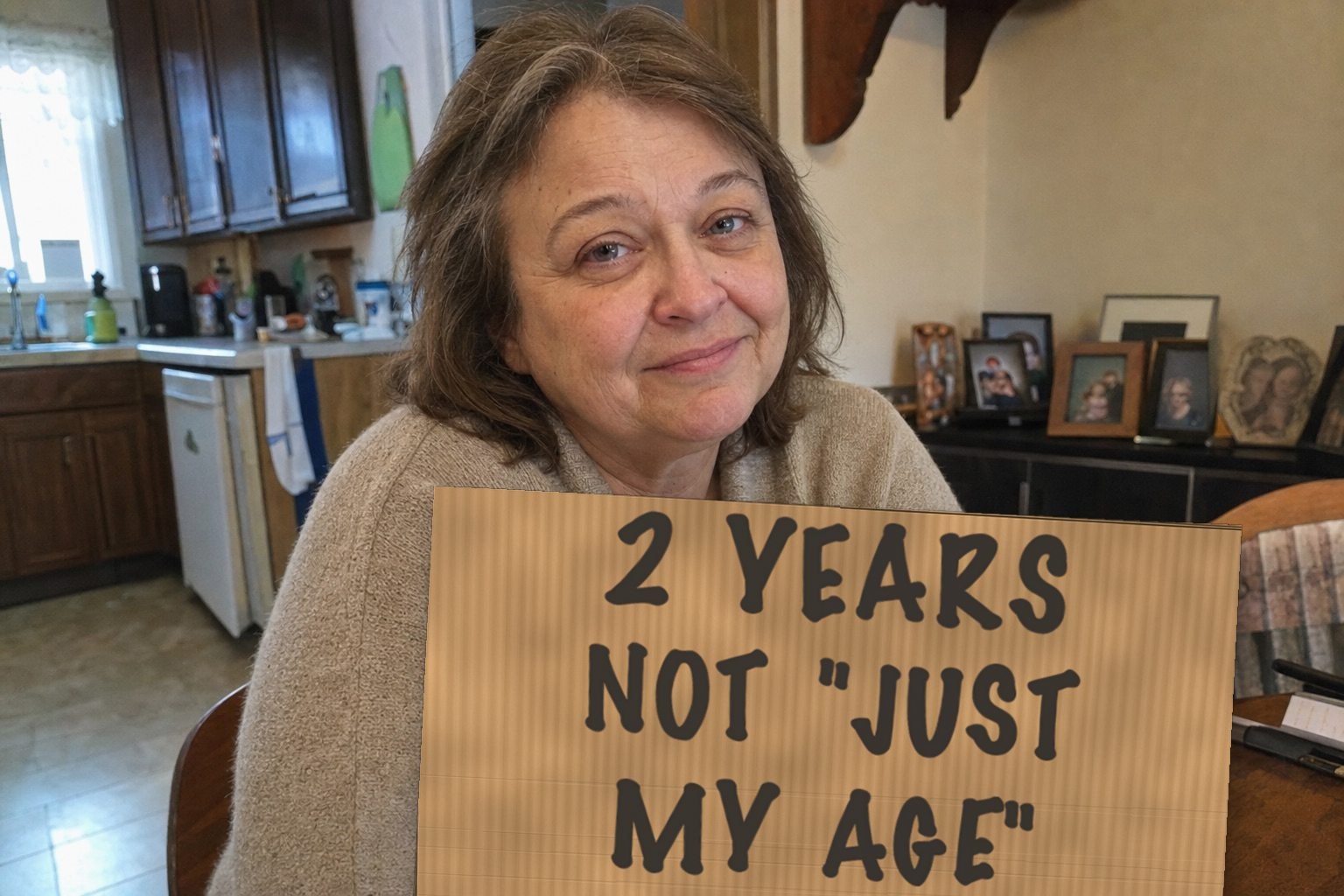
My mother spent more than a decade inside one sentence. It started with small things — a name, her keys, the word on the tip of her tongue. Her doctor called it completely normal for her age, told her to stay mentally active, and that was the whole appointment.
Within a year the slips were not small. She asked the same question twice in an evening, then twice in an hour, then forgot she had asked at all. Sticky notes went up on the fridge, the mirror, the door. She built her entire life around not being caught forgetting.
Her confidence went first. She rehearsed conversations before family visits, terrified of blanking on a grandchild’s name — a woman who had run the family calendar out of her head for forty years. Then she stopped telling her stories, the ones we could all recite along with her.

Every appointment produced the same three answers. That it was normal at her age. That she could try a memory supplement — ginkgo, maybe fish oil. That we should come back in six months and see where things stood.
So she started the carousel. Each new bottle bought a good fortnight and then the fog came back exactly as before, leaving another empty jar in the cabinet. Year over year the lapses got worse, not better.
What I keep returning to is that in all those years, nobody ever asked a different question. Not once did anyone wonder aloud whether something other than time might be making it worse. Eventually we heard the sentence we had been dreading — that it might be time she stopped living on her own — and she handed over her keys, her kitchen and her calendar without complaint.

Then it was my turn
Two years ago, at 54, I was introducing my husband’s colleague at a dinner party — a woman I had met a dozen times — and her name was simply gone. I laughed it off and assumed I was tired.
Within a month it was happening weekly. Fog in the mornings, word-hunting mid-sentence, the walking-into-a-room-and-forgetting-why thing. I booked an appointment. The tests came back unremarkable, which should have been a relief.

Instead my doctor smiled, tapped his pen on the desk, and said the words I had heard my mother’s doctors say for fifteen years. Completely normal at your age. Stay mentally active. Watch your stress. If it gets noticeably worse we can look into it further down the road.
I asked whether there was anything else worth looking at, besides puzzles and waiting for it to get bad enough to investigate. He suggested crosswords and an omega-3, and said we would see where things stood in a year.
I sat in the car park for twenty minutes afterwards. He was not going to help me find an answer. He was going to monitor me down the same road my mother took.

Three months of doing exactly what I was told
Crosswords every morning. A brain-training app three times a week. Sugar cut right back. Ginkgo and omega-3, taken religiously.
Three months later I took stock. The morning fog was as thick as ever and the name-blanking had, if anything, got more frequent. My husband suggested I try not to stress about it, and mentioned that his colleague forgets names constantly and is fine. He thought I was turning into one of those people who chase internet theories instead of listening to their doctor.
That stung, because he had watched my mother fade alongside me. I asked for three more months before anyone filed me under just aging. Then I opened my laptop and started reading properly.
The thing nobody had mentioned
Every mainstream page told me the same four things: do puzzles, eat fish, manage stress, sleep more. Then I found a body of research about something I had never heard raised in any appointment — how the brain handles its own waste overnight.
What the sleep research describes
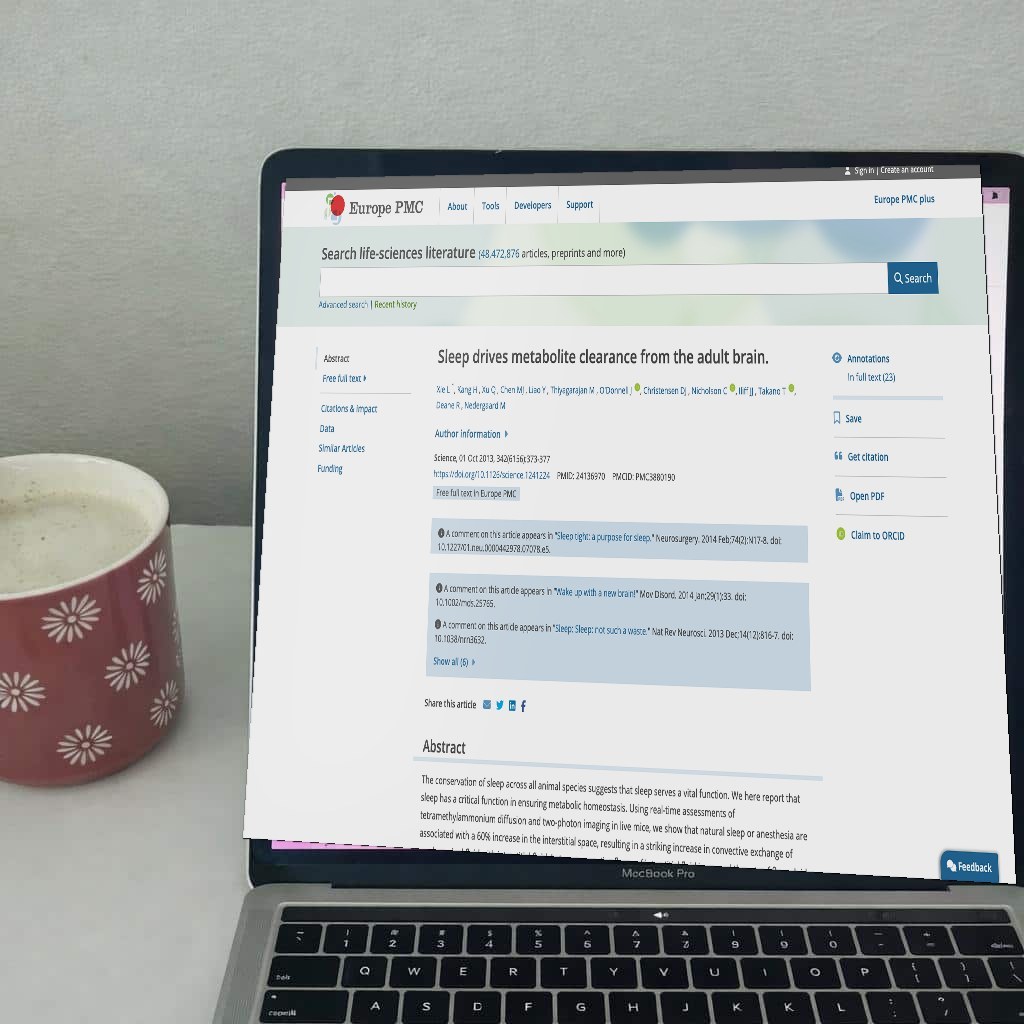
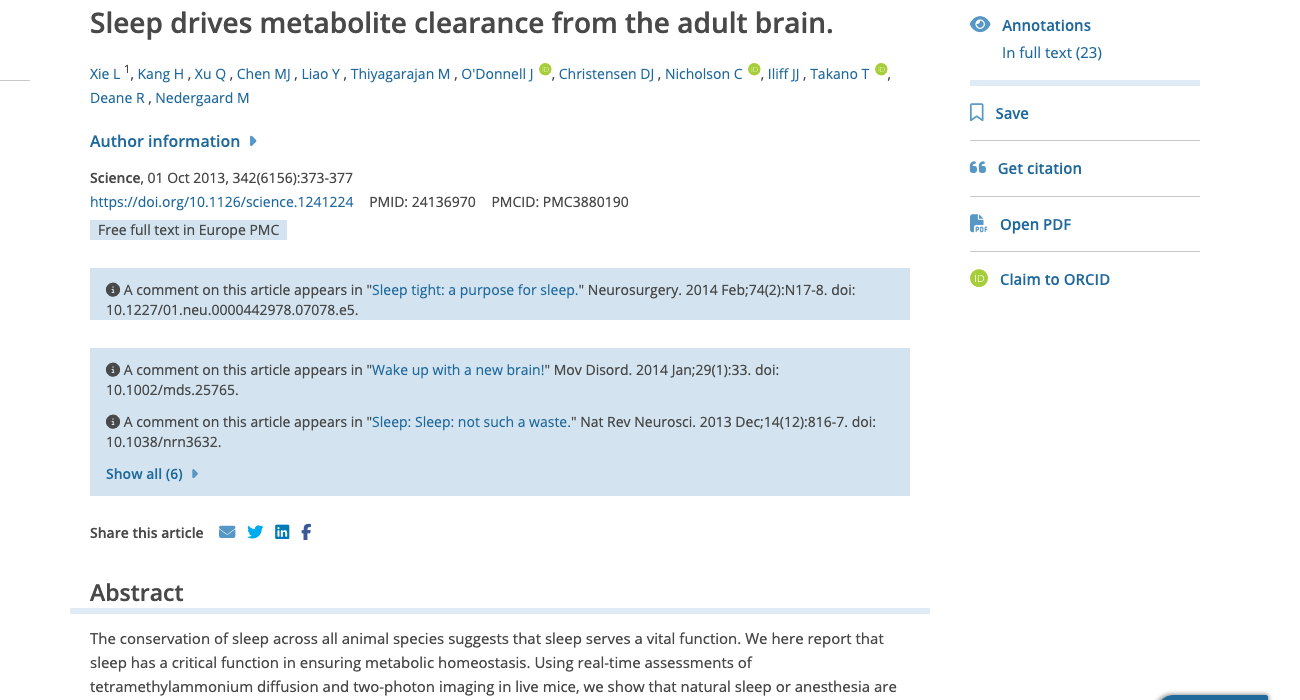
Your brain produces metabolic waste during every waking hour. In 2013 a team at the University of Rochester published work in Science showing that in sleeping mice, the spaces between brain cells widened substantially and fluid exchange increased — clearing waste products, including beta-amyloid, far faster than during waking.
Waste accumulates as a by-product of ordinary brain activity through the day.
Fluid exchange between brain cells increases markedly, and clearance of waste speeds up.
Human imaging has found measurable amyloid increases after a single night of deprivation.
That was the first explanation I had read that connected how I slept with how my mornings felt — rather than telling me to do another crossword.
Before I go further — what this research does and does not show
I got carried away when I first read this, and I would rather you did not. Here is the honest split, because a lot of pages on this subject blur it.
That sleep and the brain’s waste clearance are linked; that clearance rises during sleep in animal models; and that poor sleep is associated with cognitive decline in large population studies.
That any pillow changes brain clearance. That a pillow affects memory. Or that neck position at night has been tested as a treatment for anything. No trial has looked at that.
So I want to be straight with you: what follows is why I changed my pillow, and what I noticed afterwards. It is not proof that a pillow cleans your brain, and I would be sceptical of anyone who tells you it is.
Why my sleep was the obvious place to start
I was sleeping badly and had been for years. Waking with a stiff neck. Flattening the pillow into a wedge at 2 a.m. Getting ten hours and still surfacing foggy. If sleep quality is the lever that research points at, then the object my head spends eight hours on every night seemed like a reasonable thing to examine before adding another capsule.

It is also worth noticing where the money is. Capsule subscriptions run thirty to fifty dollars a month, indefinitely. Brain-training apps bill annually, indefinitely. A pillow you buy once and replace in a few years supports nobody’s recurring revenue, which may be part of why it never comes up.
Most so-called ergonomic pillows disappointed me. I bought three from Amazon and slept on each for six weeks. They were soft foam with a confident name, and by two in the morning every one of them had collapsed into the same flat wedge as the pillow I had replaced.
The one I actually kept
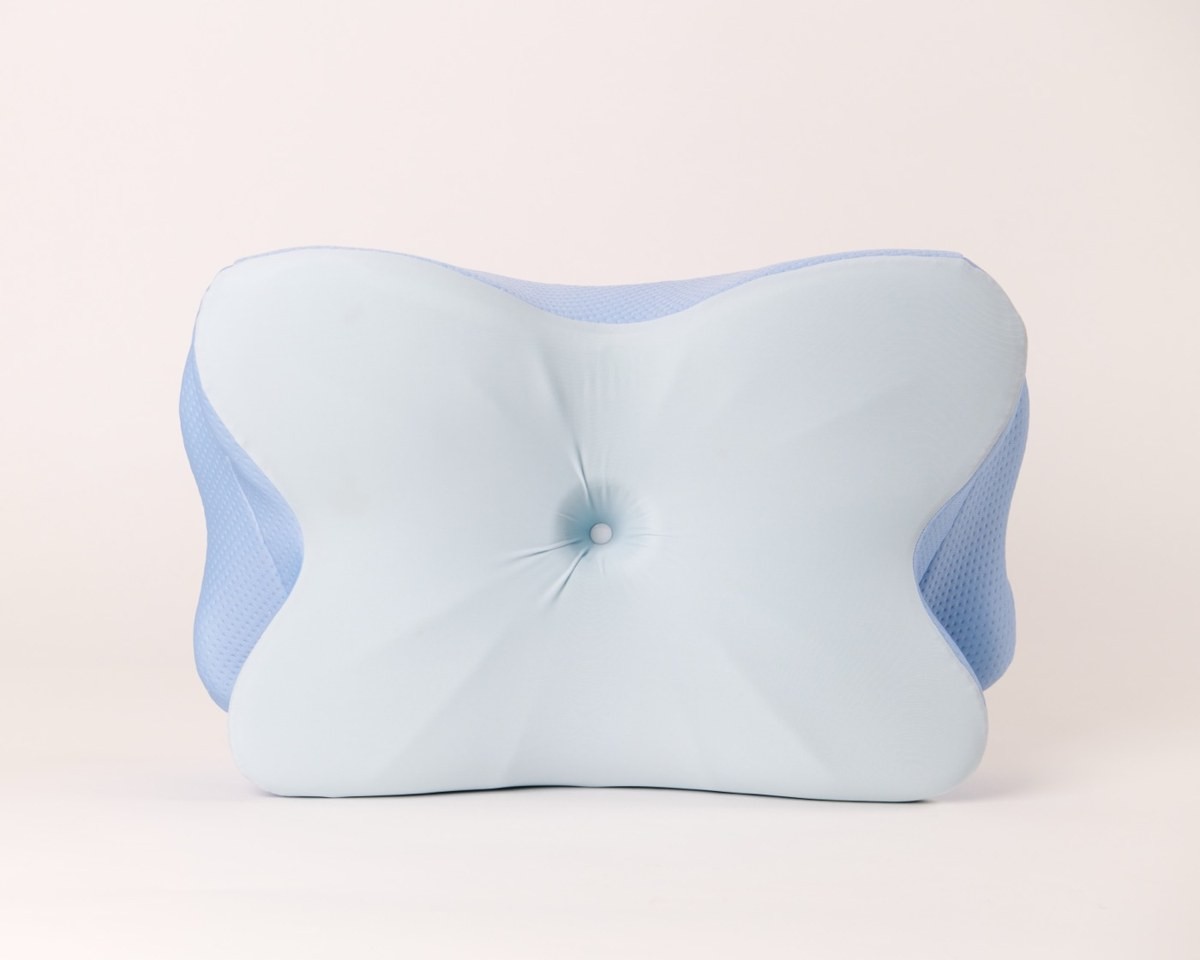
I found Derila Ergo through a forum thread where several people described the same thing: a contoured memory-foam pillow that still held its shape by morning. What sold me was that the shape is doing the work — there is nothing to take, remember or refill.
A dense memory-foam core
Firm enough to hold its height through the night rather than compressing flat within the first hour.
A cradle for the neck
A contour that beds the neck in its natural curve instead of leaving it bridging a gap.
Raised side wings
Keeps the head from rolling out of alignment when you turn over in the night.
A shoulder arch
Gives the shoulder somewhere to sit so a side sleeper’s spine stays roughly straight.
The first few nights felt odd — firmer than I was used to, and my neck had to get used to being held rather than propped. By the second week that had passed.
What changed, and what I can’t claim
I stopped waking with a stiff neck first. That much I am confident about, because it was immediate and physical. The mornings took longer — a few weeks before I noticed I was getting through the paper without re-reading paragraphs, and longer still before my husband mentioned I had stopped asking him things twice.
At my next appointment my doctor asked how the memory had been. I told him most days I barely thought about it. He looked at his notes, looked at me, and said whatever I was doing, to keep doing it. He did not make a claim about why, and neither will I.
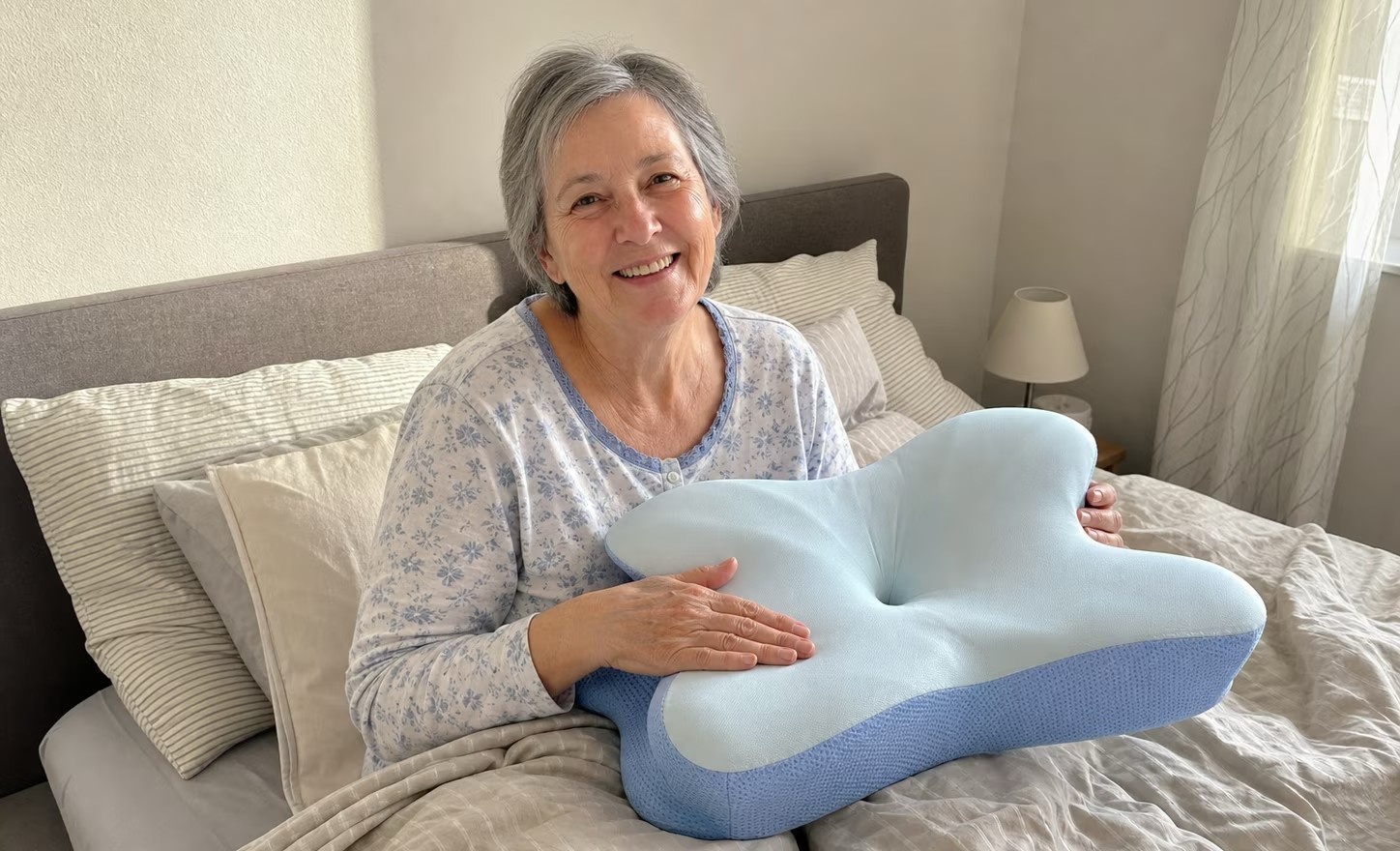
Here is the part I owe you. I changed one thing and several things improved, and that is exactly the kind of evidence a person should hold loosely. I also slept better because I was sleeping better — not necessarily because anything was being flushed out of my head. I cannot separate those, and nor can anyone selling you a pillow.
What I would say is this: if you are waking stiff, sleeping badly, and being told your foggy mornings are simply your age, then the surface you sleep on is a cheap, reversible thing to examine. It is not a treatment. It is not a substitute for an appointment. But it is a better use of sixty nights than another bottle of capsules.